
AI and the future of sports
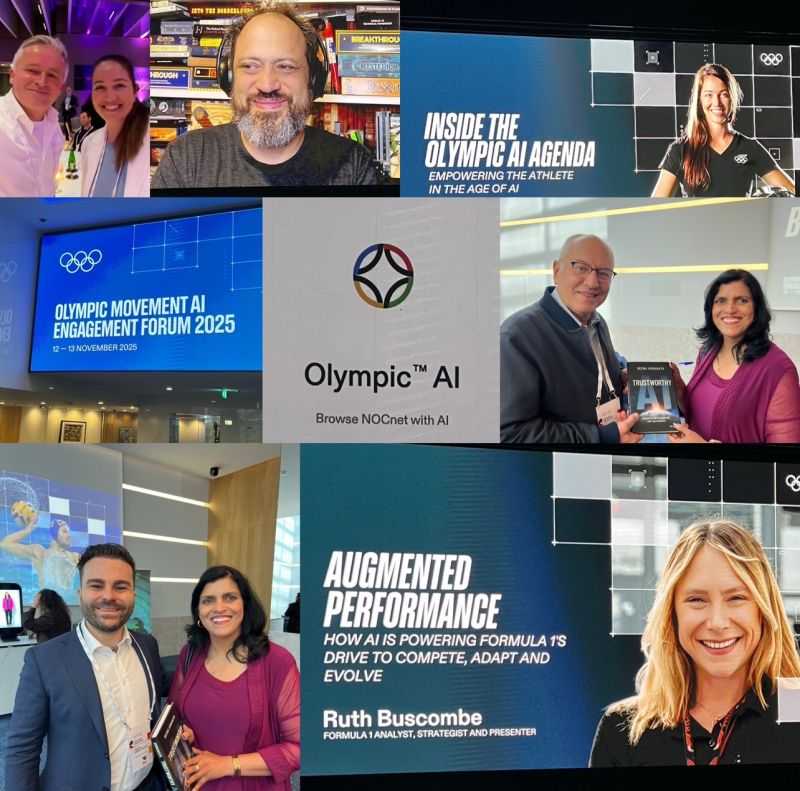
AI is redefining sport—unlocking performance, enriching storytelling, and, crucially, protecting athletes. The thread tying it all together is trust. Two days attending the IOC AI-forum showed the unique opportunities how sport can benefit from AI technology. My insights of day 1👉
1) From the outset, it’s clear that AI should serve athletes first. As Sarah Walker (IOC member) puts it, “Innovation empowers the athletes, their journey and their protection,” and she reminds us that AI “relies on a foundation of data”. This emphasis on data dignity is echoed across the conference: data are the fuel, but privacy and consent must govern how we use them.
2) The human element in AI remains central even as technology advances. Ethan Mollick (Professor at Wharton) cautions that “AI has strong influence on persuasion and change of mind. Especially through conversations,” highlighting the power—and the responsibility—of AI-driven interactions. The takeaway is not to fear AI, but to design with intention: ensure every AI-enabled engagement respects athletes and fans.
3) Data storytelling emerges as a powerful asset. Ruth Buscombe notes that we should “bring data stories to life. Fans love numbers & stats,” while also pointing to real-world constraints. The message is concrete: if we frame data insights well, they can captivate audiences and drive smarter decisions without breaking the budget.
4) Beena Ammanath reminds us that AI is “in infancy, but already delivering real value”. Trust is crucial to achieve success with AI plus the need to be alert about “bias at scale” and the necessity of keeping the human in the loop. The risk of misuse is real, including the dangers of deep fake video and rapid content creation. Her closing note—that we are “steeped in AI, or gonna be steeped in”—is a call to proactive education.
5) Talent development is another topic. Abhinav Bindra OLY speaks to the subtle, “invisible skills” that AI can help surface, noting that “AI can hear the whisper,” although “technology should not replace human touch in talent development.” Early detection and holistic support—through schooling, travel, and nurturing—are part of a humane approach where AI augments, not replaces, mentors.
6) On the health and performance front, the conversation touches injury prediction and wellbeing. In sports medicine, practical questions arise: “Need for better research to predict or prevent injury,” and the advent of digital twins and virtual patients. These ideas point to a future where data-informed care complements expert clinical judgment.
7) The afternoon sessions expand the lens to fan engagement and broader technology adoption. Angela Ruggiero captures a powerful shift: “Data driven sports has the superpower to change the world. Yet she also surfaces a fundamental challenge—knowing “who your fans are” in a landscape overflowing with content.
AI is redefining sport—unlocking performance, enriching storytelling, and, crucially, protecting athletes. The thread tying it all together is trust. Two days attending the IOC AI-forum showed the unique opportunities how sport can benefit from AI technology. My insights of day 1👉
1) From the outset, it’s clear that AI should serve athletes first. As Sarah Walker (IOC member) puts it, “Innovation empowers the athletes, their journey and their protection,” and she reminds us that AI “relies on a foundation of data”. This emphasis on data dignity is echoed across the conference: data are the fuel, but privacy and consent must govern how we use them.
2) The human element in AI remains central even as technology advances. Ethan Mollick (Professor at Wharton) cautions that “AI has strong influence on persuasion and change of mind. Especially through conversations,” highlighting the power—and the responsibility—of AI-driven interactions. The takeaway is not to fear AI, but to design with intention: ensure every AI-enabled engagement respects athletes and fans.
3) Data storytelling emerges as a powerful asset. Ruth Buscombe notes that we should “bring data stories to life. Fans love numbers & stats,” while also pointing to real-world constraints. The message is concrete: if we frame data insights well, they can captivate audiences and drive smarter decisions without breaking the budget.
4) Beena Ammanath reminds us that AI is “in infancy, but already delivering real value”. Trust is crucial to achieve success with AI plus the need to be alert about “bias at scale” and the necessity of keeping the human in the loop. The risk of misuse is real, including the dangers of deep fake video and rapid content creation. Her closing note—that we are “steeped in AI, or gonna be steeped in”—is a call to proactive education.
5) Talent development is another topic. Abhinav Bindra OLY speaks to the subtle, “invisible skills” that AI can help surface, noting that “AI can hear the whisper,” although “technology should not replace human touch in talent development.” Early detection and holistic support—through schooling, travel, and nurturing—are part of a humane approach where AI augments, not replaces, mentors.
6) On the health and performance front, the conversation touches injury prediction and wellbeing. In sports medicine, practical questions arise: “Need for better research to predict or prevent injury,” and the advent of digital twins and virtual patients. These ideas point to a future where data-informed care complements expert clinical judgment.
7) The afternoon sessions expand the lens to fan engagement and broader technology adoption. Angela Ruggiero captures a powerful shift: “Data driven sports has the superpower to change the world. Yet she also surfaces a fundamental challenge—knowing “who your fans are” in a landscape overflowing with content.
AI is redefining sport—unlocking performance, enriching storytelling, and, crucially, protecting athletes. The thread tying it all together is trust. Two days attending the IOC AI-forum showed the unique opportunities how sport can benefit from AI technology. My insights of day 1👉
1) From the outset, it’s clear that AI should serve athletes first. As Sarah Walker (IOC member) puts it, “Innovation empowers the athletes, their journey and their protection,” and she reminds us that AI “relies on a foundation of data”. This emphasis on data dignity is echoed across the conference: data are the fuel, but privacy and consent must govern how we use them.
2) The human element in AI remains central even as technology advances. Ethan Mollick (Professor at Wharton) cautions that “AI has strong influence on persuasion and change of mind. Especially through conversations,” highlighting the power—and the responsibility—of AI-driven interactions. The takeaway is not to fear AI, but to design with intention: ensure every AI-enabled engagement respects athletes and fans.
3) Data storytelling emerges as a powerful asset. Ruth Buscombe notes that we should “bring data stories to life. Fans love numbers & stats,” while also pointing to real-world constraints. The message is concrete: if we frame data insights well, they can captivate audiences and drive smarter decisions without breaking the budget.
4) Beena Ammanath reminds us that AI is “in infancy, but already delivering real value”. Trust is crucial to achieve success with AI plus the need to be alert about “bias at scale” and the necessity of keeping the human in the loop. The risk of misuse is real, including the dangers of deep fake video and rapid content creation. Her closing note—that we are “steeped in AI, or gonna be steeped in”—is a call to proactive education.
5) Talent development is another topic. Abhinav Bindra OLY speaks to the subtle, “invisible skills” that AI can help surface, noting that “AI can hear the whisper,” although “technology should not replace human touch in talent development.” Early detection and holistic support—through schooling, travel, and nurturing—are part of a humane approach where AI augments, not replaces, mentors.
6) On the health and performance front, the conversation touches injury prediction and wellbeing. In sports medicine, practical questions arise: “Need for better research to predict or prevent injury,” and the advent of digital twins and virtual patients. These ideas point to a future where data-informed care complements expert clinical judgment.
7) The afternoon sessions expand the lens to fan engagement and broader technology adoption. Angela Ruggiero captures a powerful shift: “Data driven sports has the superpower to change the world. Yet she also surfaces a fundamental challenge—knowing “who your fans are” in a landscape overflowing with content.




Ready to Go Global?
Don’t stay on the sidelines.
Go where opportunity meets execution. Join us in shaping the future of international sports business. Partner with GST and make your next move global.
With GST’s experience, networks, and intelligence, your global growth starts now.
Ready to Go Global?
Don’t stay on the sidelines.
Go where opportunity meets execution. Join us in shaping the future of international sports business. Partner with GST and make your next move global.
With GST’s experience, networks, and intelligence, your global growth starts now.
Ready to Go Global?
Don’t stay on the sidelines.
Go where opportunity meets execution. Join us in shaping the future of international sports business. Partner with GST and make your next move global.
With GST’s experience, networks, and intelligence, your global growth starts now.